2026-08-16 - Velvet Scepters & Brawny Briefs: Renaissance Court Portraits in Opulent Baroque Fantasy - 20 artworks
Renaissance courtiers in velvet and gold reveal sculpted physiques beneath branded briefs. Opulent chiaroscuro portraits of power, disciplin

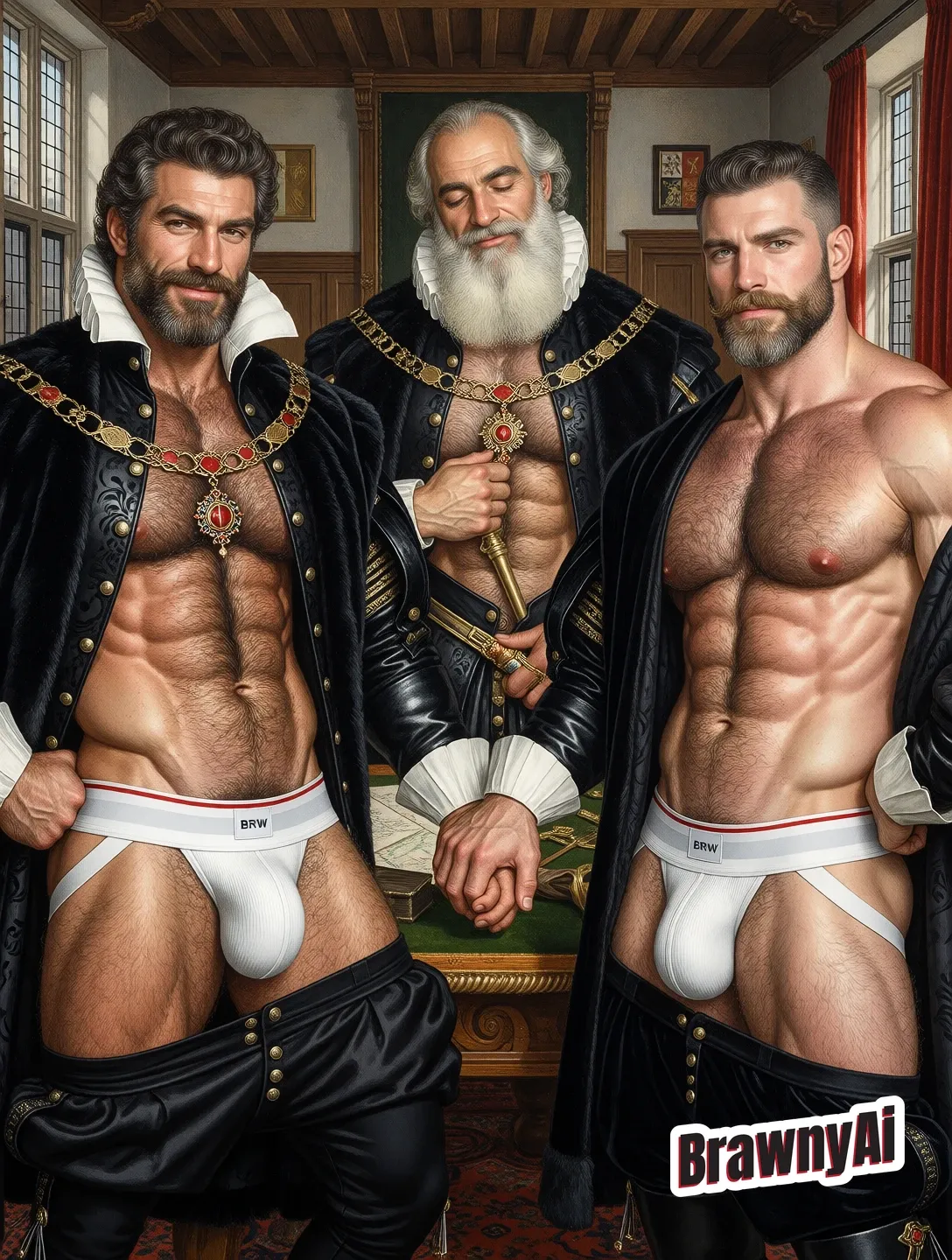
This drop fuses Titian-level grandeur with modern fetish aesthetics, presenting triptychs of Renaissance courtiers whose velvet robes and gold chains are undone to reveal sculpted torsos clad only in branded undergarments. The lighting is theatrical chiaroscuro: warm candlelight pools on glistening skin while deep shadows carve abdominal ridges into living marble. It’s a manifesto of controlled excess where power, discipline, and physical perfection are rendered as sacred geometry.
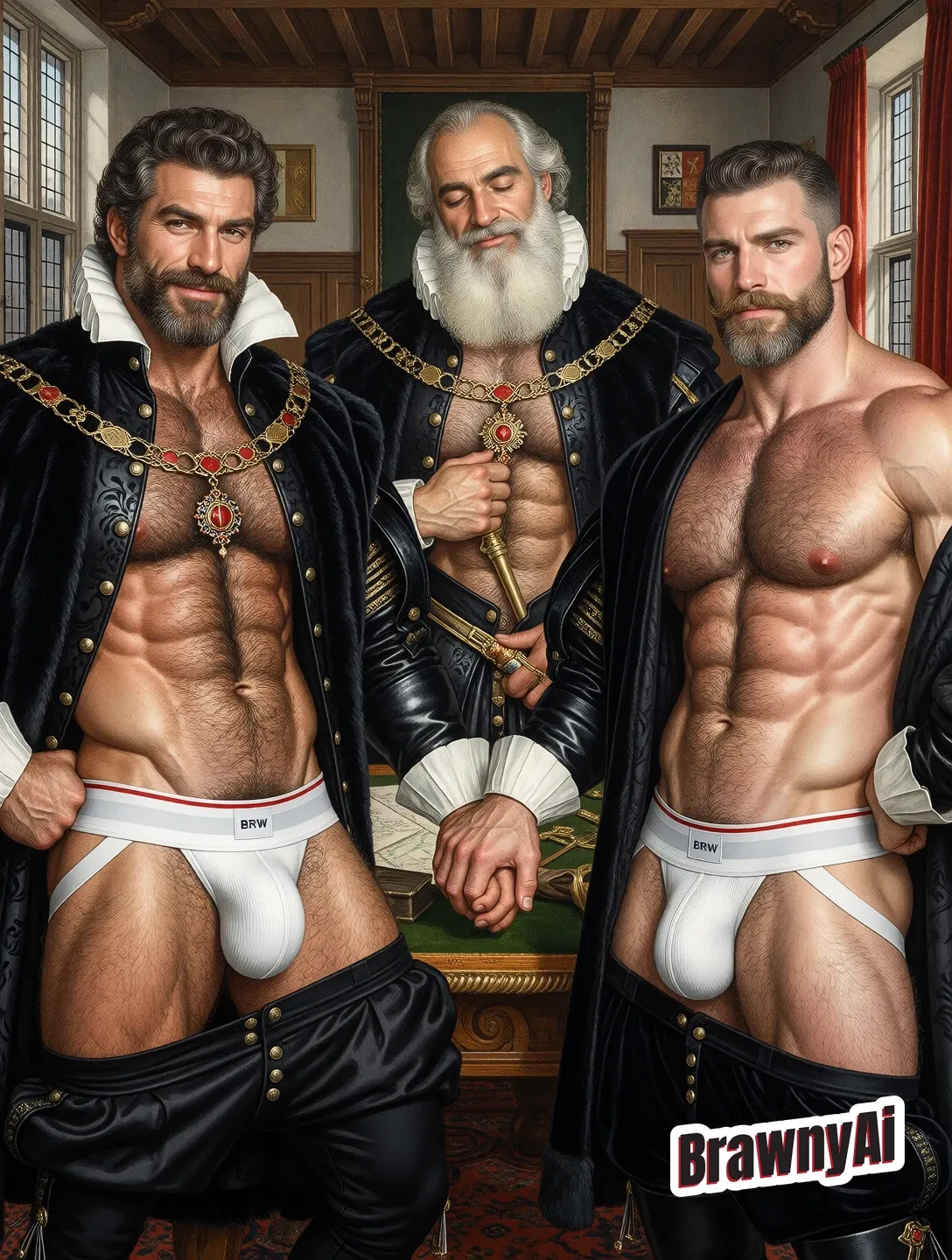
This triptych-style portrait fuses Renaissance grandeur with hyper-sculpted masculinity into something mythic and slightly surreal. The lighting is theatrical: warm daylight pours through tall mullioned windows, casting soft highlights across glistening skin and polished velvet while deepening the shadows in carved wood panelling and draped robes. A golden glow seems to emanate from the ornate chains of office they wear—each medallion catching light like a jewel in a crown—and from the candlelit corners beyond, lending an air of ceremonial intimacy. The aesthetic is opulent baroque meets fantasy realism: rich textures dominate—velvet, silk, gold filigree, bone-white ruffs, and the ribbed cotton of modern undergarments that clash with regal decorum yet somehow harmonize through their clean lines and stark contrast. The men’s physiques are rendered as living sculptures—every abdominal ridge, pectoral contour, and thigh muscle defined not for mere display but as testament to discipline, power, and inherited strength. Their torsos are draped in open ceremonial robes that cling at the shoulders and fall away at the hips, revealing anatomy with reverent precision: tension in the deltoids, definition in the obliques, the quiet drama of skin pulled taut over bone. Mood is solemn yet charged—there’s a sense of inherited authority, of men who rule not only lands but their own formidable forms. The central figure, older and bearded, holds his scepter like a conductor’s baton; his eyes are closed in contemplation or blessing. Flanking him, the younger figures gaze forward with calm intensity—as if aware they’re being painted into legend. There is no overt action, only presence: weighty, deliberate, almost liturgical. The inclusion of branded undergarments (“BRW”) reads like a deliberate anachronism—a wink to contemporary culture inserted into a world where power still wears velvet and gold chains. It transforms the image from pure fantasy into something self-aware, slightly irreverent, yet never crude. The overall effect is that of a lost painting from a court where kings trained in the gymnasium as much as in statecraft—and where even their underwear bore crests. This is not merely portraiture; it’s a manifesto of form, authority, and controlled excess—where masculinity is both weaponized and worshipped, rendered with the reverence once reserved for saints or sovereigns.
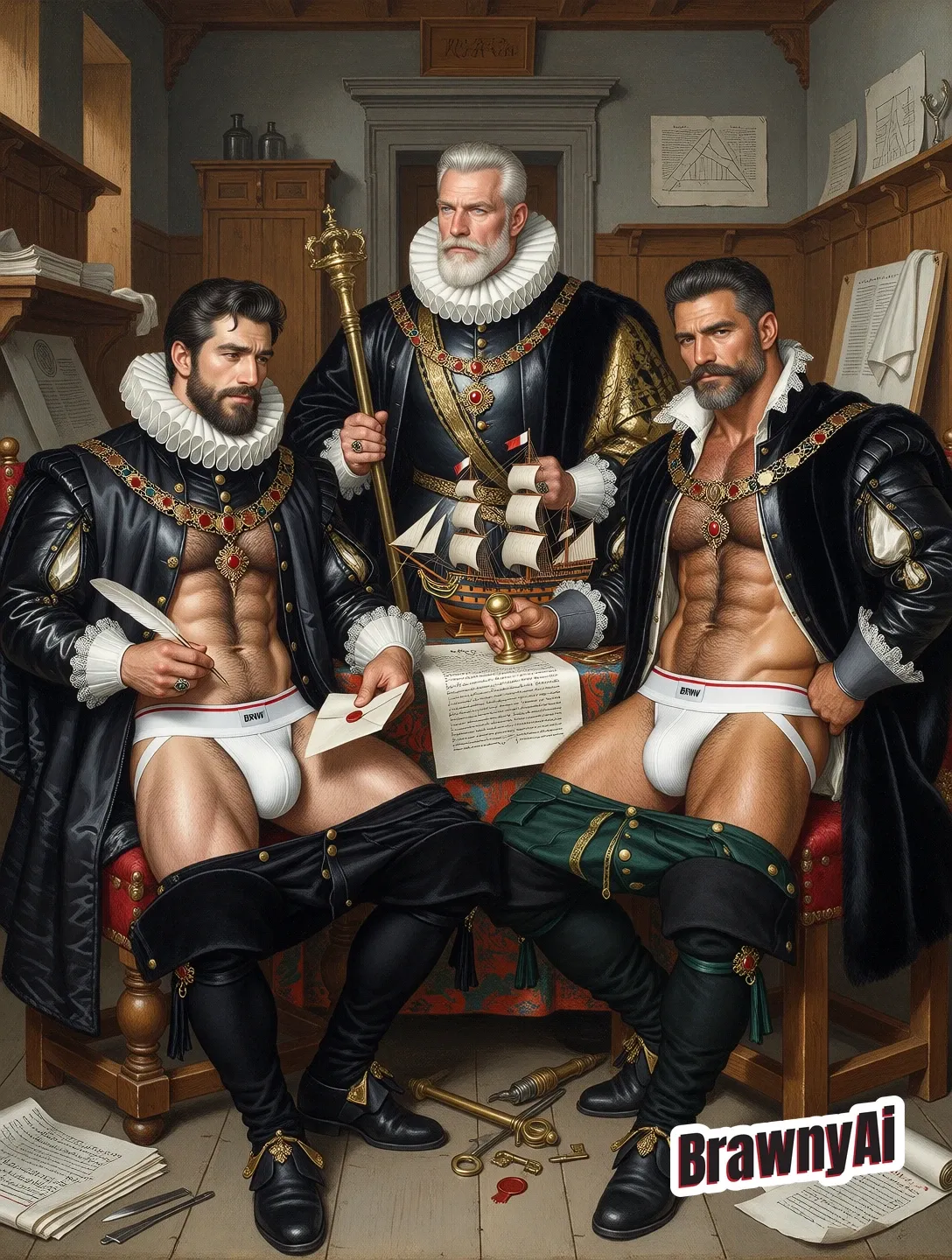
This digital artwork presents a richly detailed Renaissance-style chamber scene that blends historical grandeur with stylized physicality in the manner of a mythic council of state. The lighting is warm and theatrical — soft, directional illumination spills from unseen windows and lanterns to highlight the sheen on velvet robes, polished wood furniture, and the sculpted musculature of three central figures. Shadows are deep but controlled, lending weight and drama without obscuring form; they carve definition into faces, chests, and limbs as if each body were a monument carved in living marble. The aesthetic is opulent yet intimate — think Titian meets fantasy portraiture, with an undercurrent of modern digital polish that smooths skin tones while preserving textural richness: the crinkled parchment, the embossed seals, the gleaming gold chains. The color palette is grounded in royal blacks, deep crimsons, forest greens, and muted slate blues — all punctuated by the stark white of ruffs, underwear bands, and paper, which serve as visual anchors amid the sumptuousness. At the center stands an elder statesman, crowned not with a diadem but with authority: silver beard, stern gaze, encircled in jeweled collars, holding a scepter topped with a miniature ship — symbol of dominion over seas and subjects alike. He is fully robed, his presence anchoring the composition like a pillar of law or tradition. Flanking him are two younger men — both rendered as idealized masculine forms: broad shoulders tapering to narrow waists, abdominals etched with geometric precision, thighs thick with power. Their attire is a deliberate juxtaposition: open black cloaks lined in white lace reveal bare torsos adorned only by ornate necklaces and ceremonial belts; beneath them rest minimal undergarments — white briefs bearing discreet branding — treated not as costume but as part of the formal regalia, akin to armor or insignia. Their poses are regal yet relaxed: one holds a quill mid-draft, the other rests a hand on his hip, exuding confidence without aggression. The mood is solemn and reverent — this is no mere portrait; it is an act of consecration. These men are not merely rulers; they are embodiments of power, discipline, and physical perfection elevated to near-sacred status. The scattered keys, wax seals, and open ledgers on the floor suggest governance in motion — law being written, authority exercised — while their unapologetic exposure of form suggests a world where strength is both political currency and aesthetic virtue. In sum: this image functions as both historical fantasy and body worship — a lore-rich tableau where power is not only commanded but visibly embodied. It invites the viewer to admire not just what these men govern, but how they are governed by their own formidable presence.
💪MightyPro Exclusive
This post is reserved for active 💪MightyPro members.