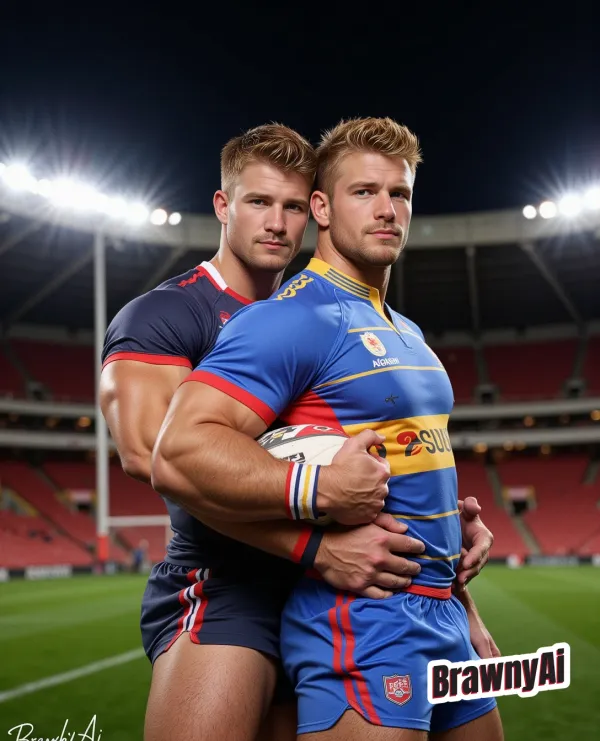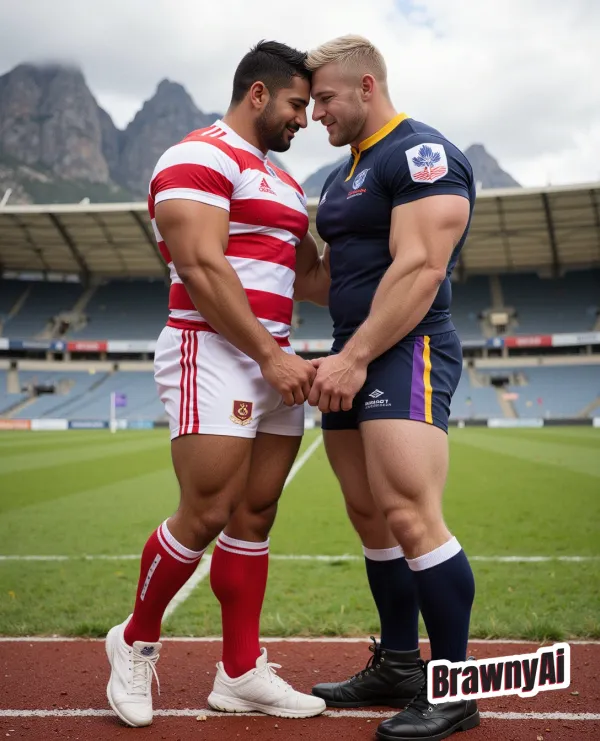
2026-07-26 - Domestic Anatomy & Brotherhood: A Cinematic Archive of Masculine Form in Laundry Rooms, Cabins, and Triptych Shadows - 22 artworks
Cinematic muscular portraits in laundry rooms, cabins, and triptych shadows. Reverent anatomy, domestic intimacy, and disciplined form.

This archive rejects the sterile gym-cardinal for a more intimate theater of strength. We’ve captured muscular men not as isolated icons, but within the quiet rituals of their lives—mid-dress in sunlit laundry rooms, sharing silent camaraderie in wood-paneled cabins, or locked in triptych shadows that feel like backstage confessions. The lighting is reverent and sculptural, turning skin into topography and underwear into secondary architecture. This is lore written in chiaroscuro: a celebration of disciplined form, domestic vulnerability, and the magnetic gravity of male presence.
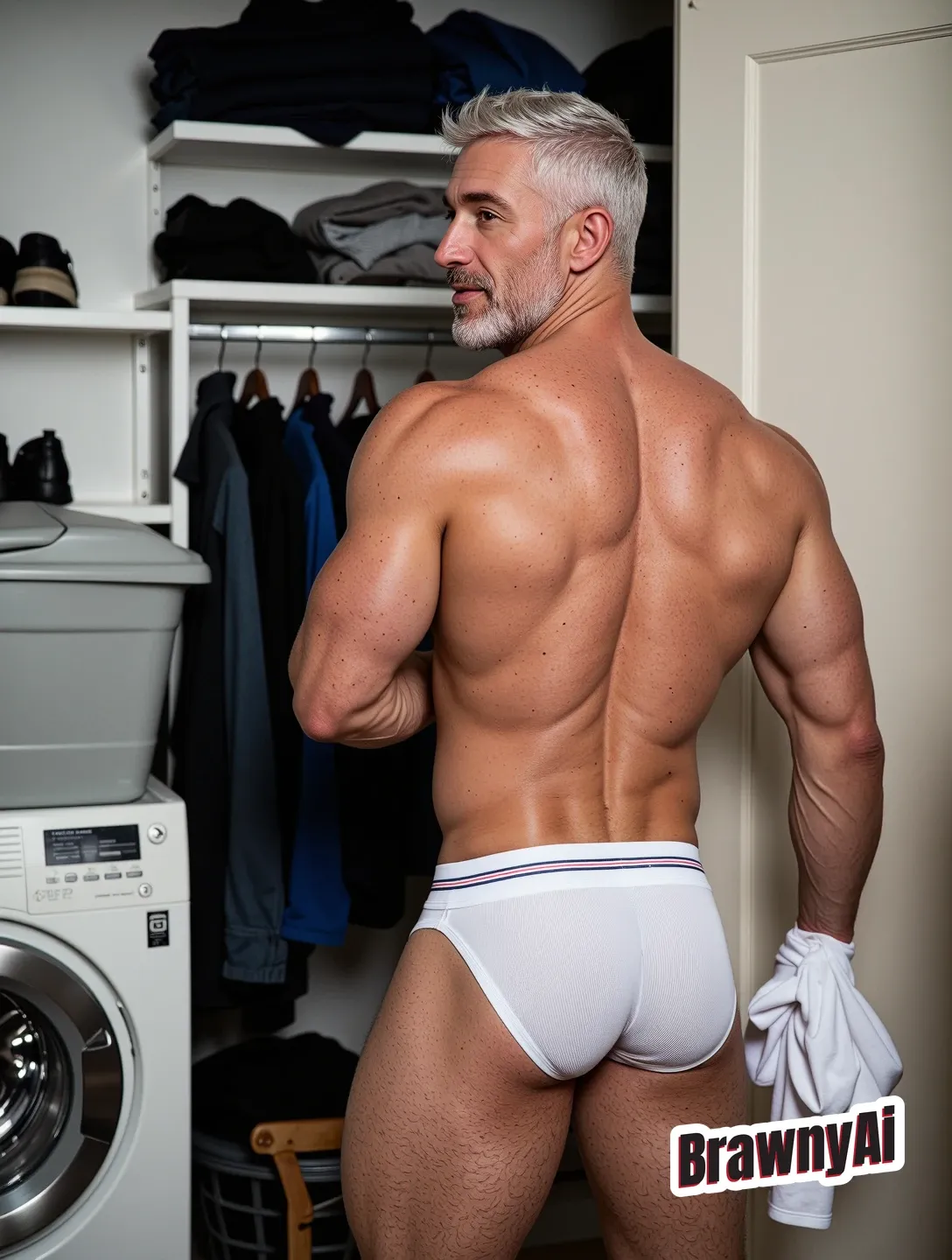
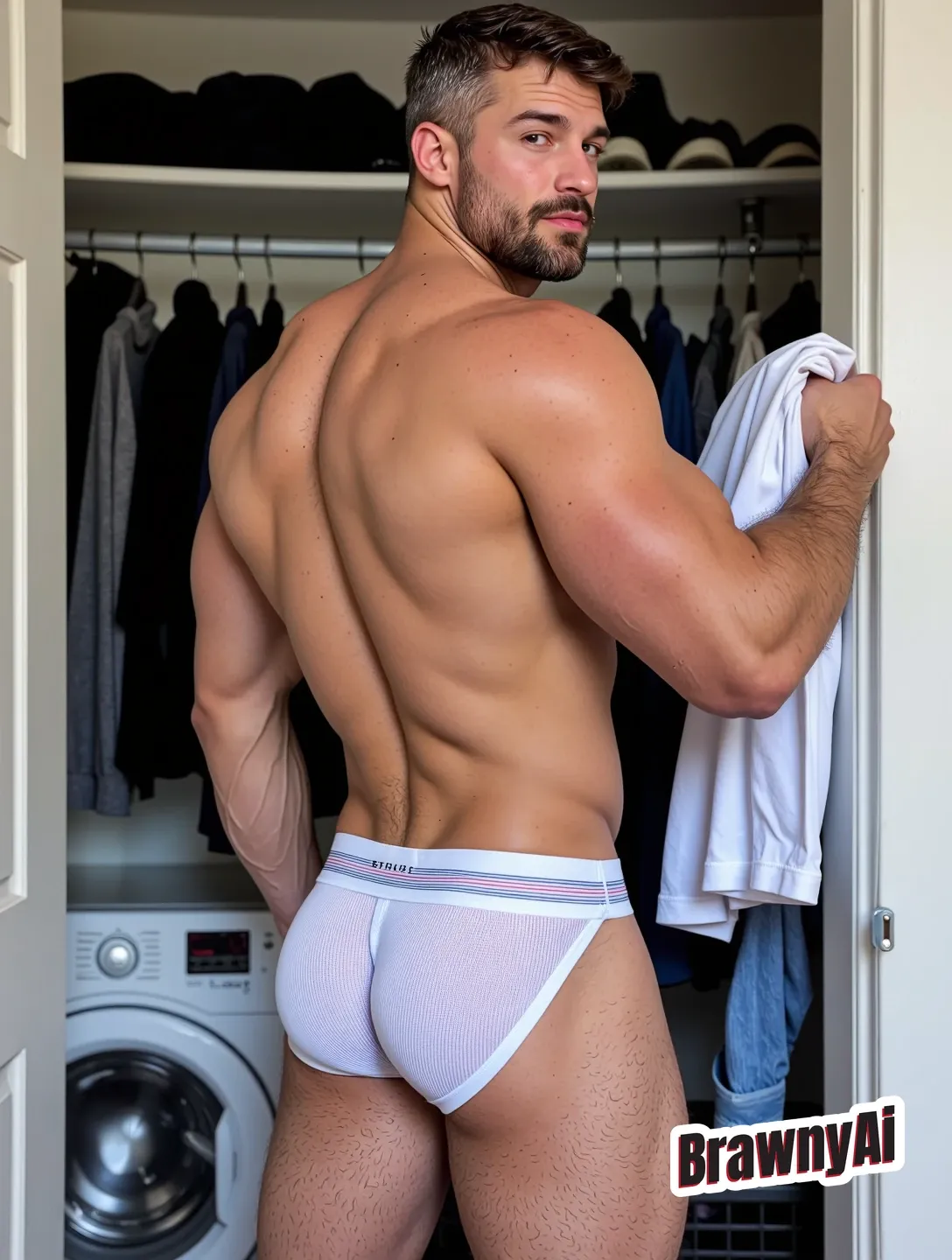
This image presents a quietly dramatic portrait: a muscular man with silver hair and beard stands in profile within a domestic laundry space—washing machine to his left, shelves of folded garments behind him, hangers suspended in soft shadow. He is clad only in white briefs with thin red-and-blue stripes at the waistband; the garment functions here less as underwear than as a minimalist frame for anatomy—a study in tension, contour, and masculine form. The lighting is cinematic yet intimate: warm, directional light spills from the front-left, sculpting his back muscles into rolling planes of shadow and highlight. The trapezius, latissimus dorsi, erector spinae, and gluteal contours are rendered with anatomical precision—the skin taut over striated muscle, veins subtly visible along arms and calves, pores and fine hair rendered in high fidelity. There is no gratuitous exposure; instead, the composition treats his physique as a monument to disciplined strength—each curve suggesting effort held still, each line implying motion arrested. The mood is introspective and grounded: domestic clutter (shoes on shelves, laundry bins, hanging coats) contrasts with the idealized form at center, creating a tension between everyday life and physical perfection. The man’s gaze turns slightly over his shoulder—not confrontational, but contemplative—as if caught mid-thought or mid-task. This glance adds narrative depth: he is not posing for spectacle; he exists in motion, between dressing and undressing, labor and rest. Aesthetic-wise, the image blends hyperrealism with stylized grooming—silver hair neatly trimmed, stubble sculpted, skin tone richly saturated yet naturalistic. The “BrawnyAi” watermark hints at digital origin, but the rendering avoids synthetic gloss; instead it leans into tactile realism: fabric texture of the briefs, condensation on the washing machine door, soft folds in the white cloth held loosely in his hand. Overall, this is a piece of visual lore as much as portraiture—a quiet mythos of modern masculinity: strong but unadorned, present in mundane spaces, aware and composed. The lighting does not dramatize for shock; it reveals with reverence.
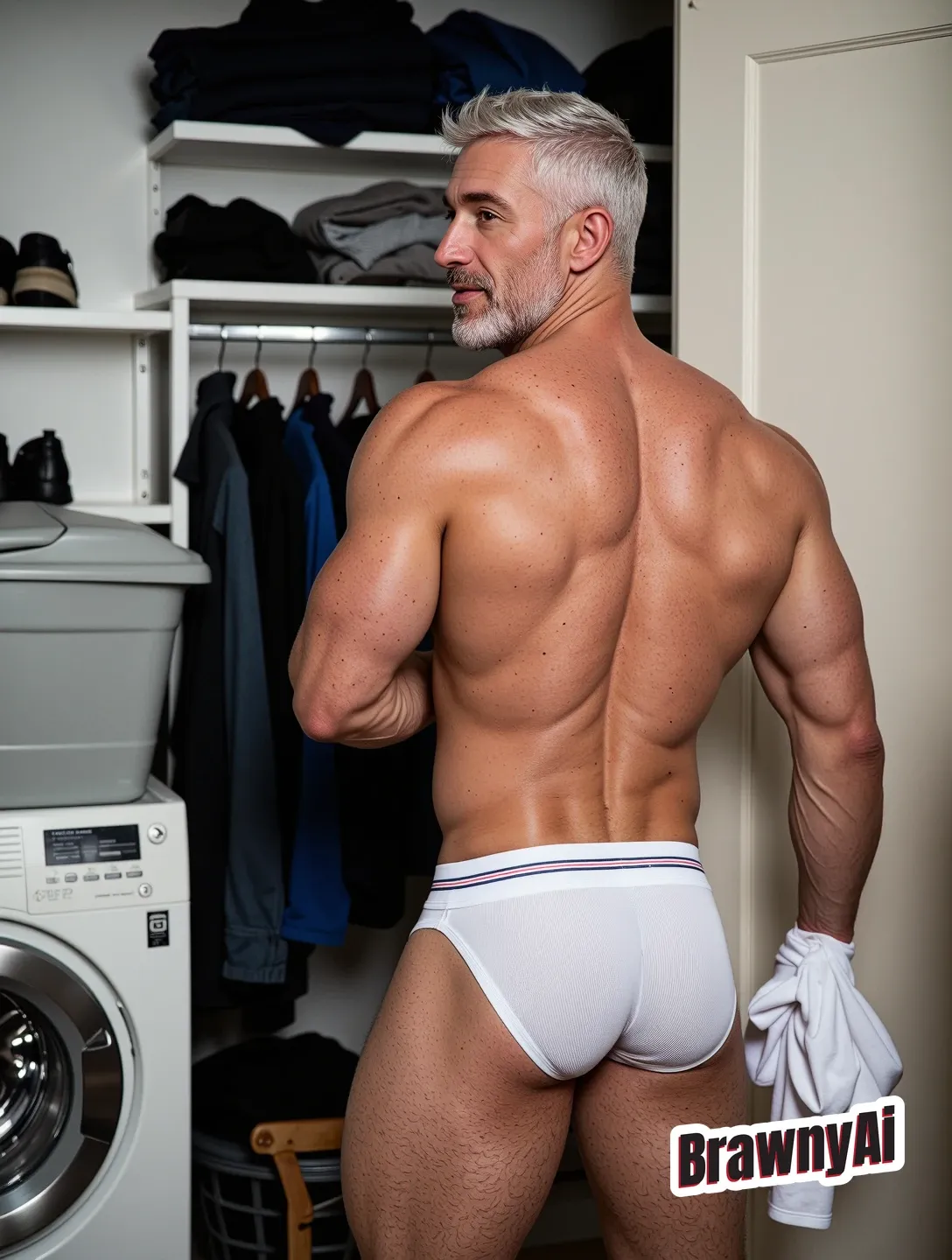
This image presents a contemporary portrait of physical masculinity rendered with the clarity and stylized realism typical of high-end digital illustration. The subject is captured in profile-threes-quarter pose, turning his head over his shoulder to meet the viewer’s gaze—an act that transforms a mundane domestic scene into something more deliberate and symbolic. Lighting plays a central role: soft, diffused daylight floods the space from the left, sculpting the contours of his musculature with gentle highlights and deep shadows. The light emphasizes the definition in his back—trapezius, latissimus dorsi, erector spinae—as if each plane has been mapped for anatomical precision. His skin glows with a natural sheen, suggesting health and vitality without overt dramatization. The ambient glow lends an almost cinematic quality to what might otherwise be a simple laundry room setting. The aesthetic is clean, modern, and slightly idealized—smooth textures, sharp edges, and flawless proportions suggest digital enhancement or AI-assisted rendering. Yet it avoids cartoonish exaggeration; instead, the form feels grounded in real anatomy, studied for tension, balance, and motion potential. The white briefs are not merely undergarments but a compositional device: their crisp lines contrast with the organic curves of his body, drawing attention to the transition from torso to thigh, and accentuating the power of the glutes and hamstrings through containment and exposure. Mood is introspective yet confident. There's no overt performance—no flexing or posing for an audience—but there is awareness: a quiet acknowledgment that he is seen. The background—the open closet with hanging garments, shelves of shoes, a washing machine—grounds the image in everyday life, yet it recedes into soft focus, allowing the figure to dominate as both subject and symbol. This work functions less like a snapshot than like a character study from a larger narrative: perhaps a man preparing for something important, or simply existing with intentionality in his own space. It blends realism with stylization, intimacy with admiration, creating an image that feels simultaneously personal and universally recognizable—a modern mythos of strength, discipline, and quiet self-possession.
💪MightyPro Exclusive
This post is reserved for active 💪MightyPro members.