2026-07-02 - Pulp Iron & Rainbow Ink: A Retro Comic-Book Physique Archive - 22 artworks
Retro comic-book muscular men in sepia ink, rainbow halftones, and pulp lighting. A physique archive that treats anatomy like architecture.

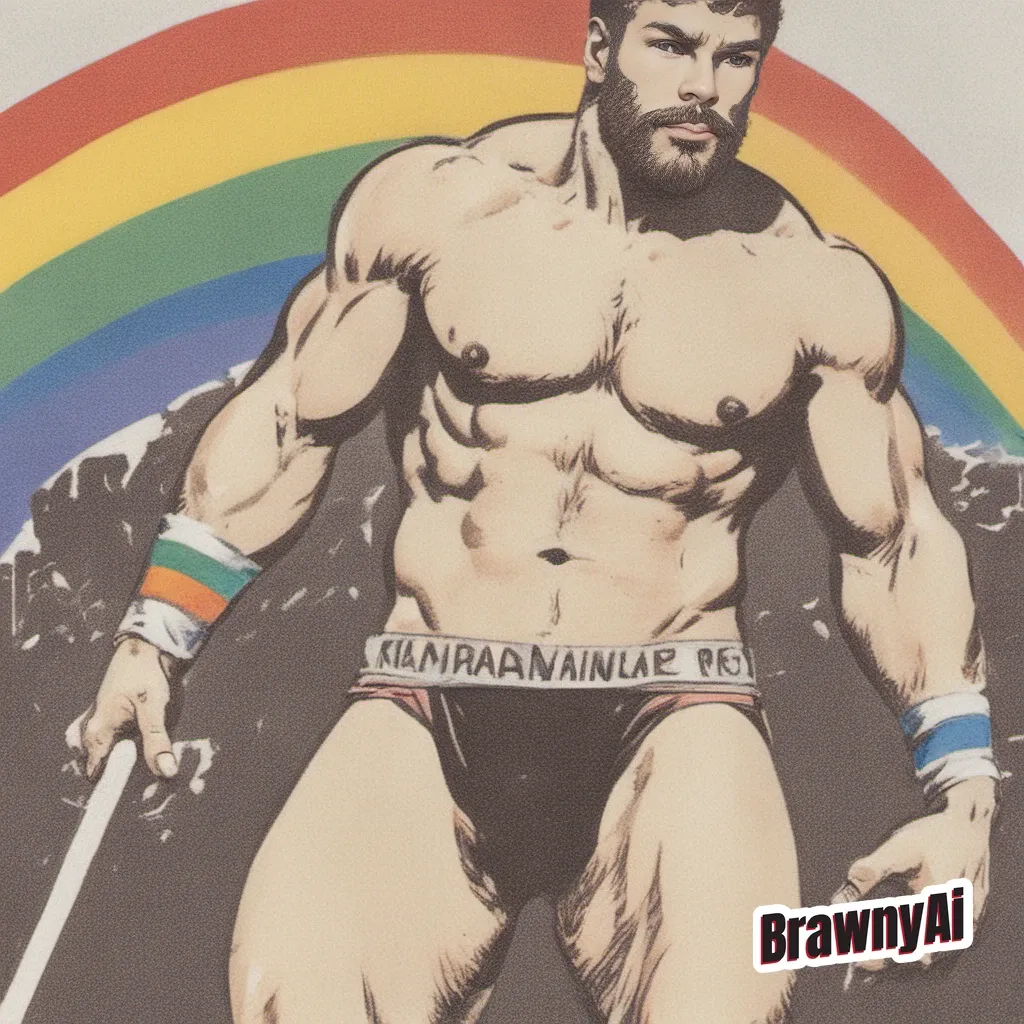
This drop fuses mid-century pulp illustration with contemporary queer iconography, rendering muscular male forms as mythic monuments rather than mere subjects. Each piece treats anatomy like architecture—inked contours, halftone shadows, and theatrical lighting sculpting pectorals, abdominals, and thighs into living bas-relief. From sepia-toned locker room studies to rainbow-hued character portraits, the collection oscillates between clinical admiration and celebratory defiance, creating a visual lore where strength is both disciplined structure and cultural statement.
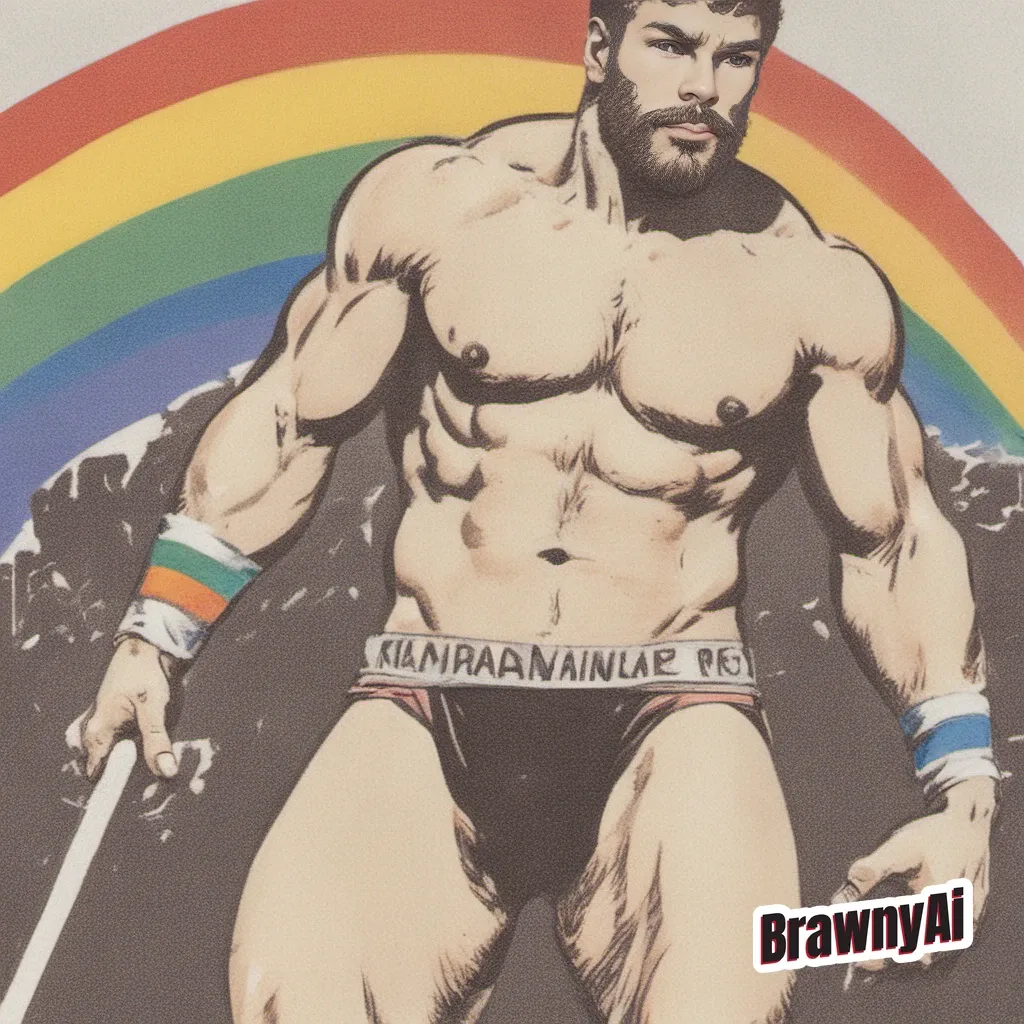
This image presents a stylized digital portrait that blends retro comic-book aesthetics with contemporary queer iconography. The central figure is rendered as a muscular male physique study: broad shoulders taper to a defined waist, pectorals and abdominals are carved with sharp contour lines, and the limbs suggest both power and flexibility. His stance—knees slightly bent, weight distributed evenly—is grounded and confident; it reads less like a pose for display than an embodiment of readiness. Lighting is dramatic but controlled: strong directional light from above-left sculpts the torso, casting deep shadows under the pectorals, along the rib cage, and beneath the arms to emphasize volume and tension. The skin tones are warm and slightly desaturated, with a grainy texture that evokes vintage print media or screen-printed t-shirt graphics. This tonal choice lends the piece an archival quality—as if it were pulled from a zine or underground poster series. The background features a bold rainbow arc rendered in flat bands of red, orange, yellow, green, blue, and violet, reminiscent of both pride symbolism and classic comic halftones. Behind the figure, jagged black shapes suggest either an abstract landscape or a stylized explosion of ink; they add kinetic energy without distracting from the central form. Attire is minimal: dark briefs with a wide waistband bearing illegible lettering in block capitals, plus two wristbands—one striped in green, white, and orange; the other blue and white. The simplicity of clothing directs attention to anatomy as architecture: the way fabric clings at the hips, the tension in forearms gripping what appears to be a staff or baton, the subtle flex of calves—all treated with sculptural precision. The overall mood is defiant yet celebratory. There’s an unapologetic confidence in the gaze and posture; combined with the rainbow motif and graphic style, it suggests themes of visibility, strength, and pride. The artwork functions as both a character portrait and a cultural statement—equal parts homage to bodybuilding illustration and modern queer representation.
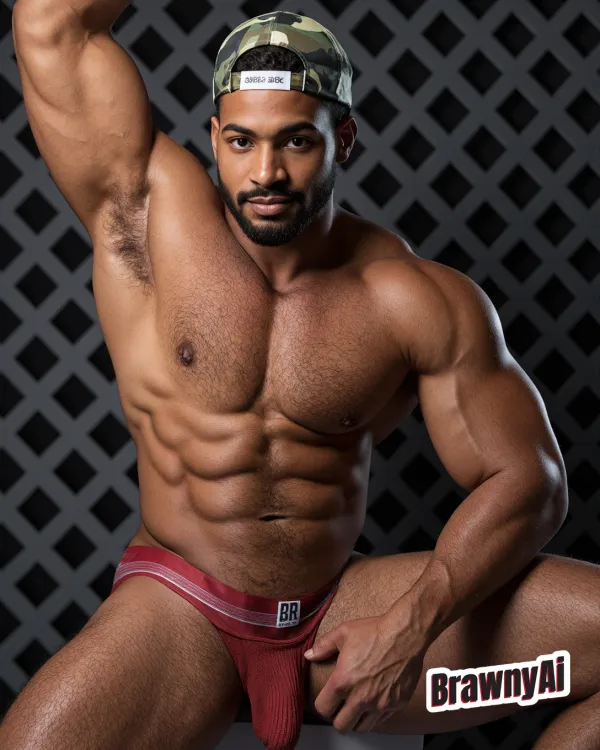
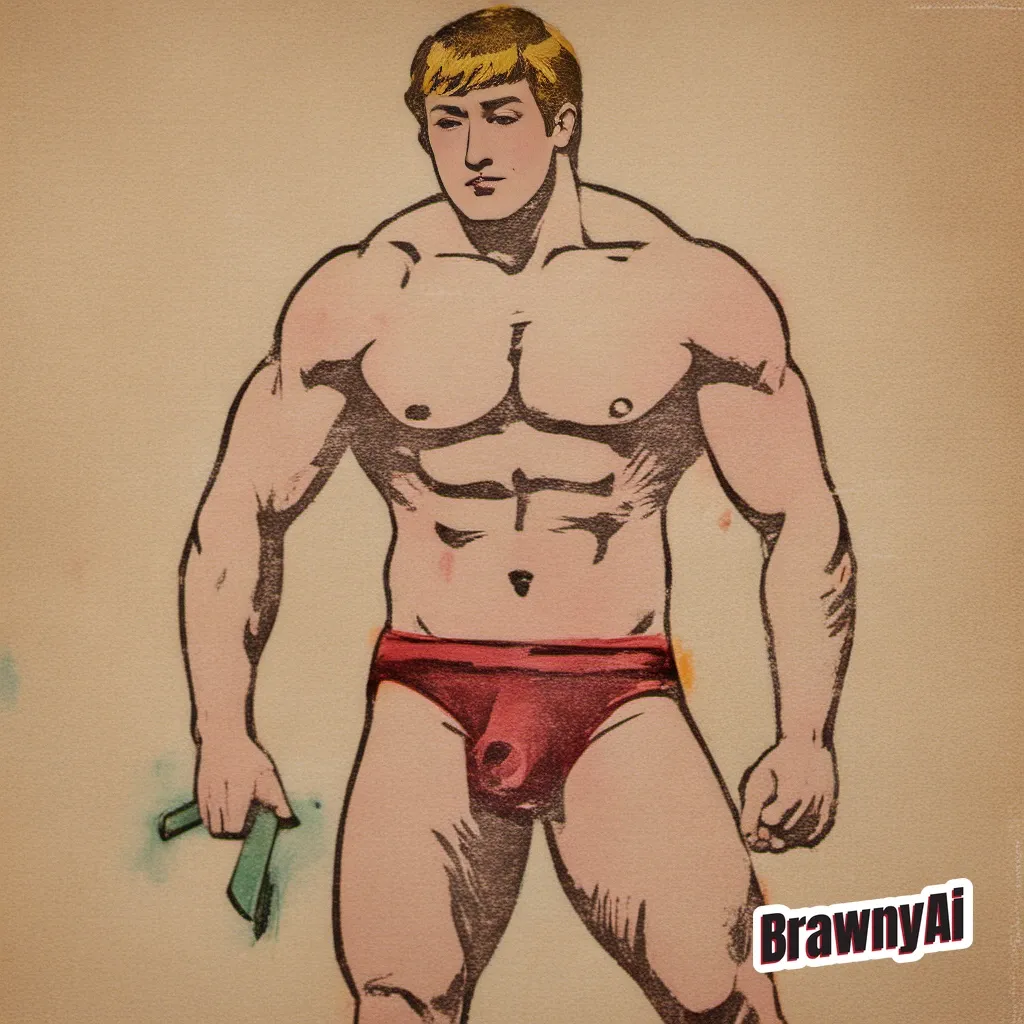
This piece reads like a retro comic-book character sheet rendered in muted ink-wash tones—inked contours, flat color fields, and the faint grain of aged paper as its canvas. The lighting is deliberately theatrical: a single warm source from upper left sculpts the torso with heavy chiaroscuro; shadows pool under the pectorals, along the rib cage, and beneath the arms in thick, expressive strokes that suggest both mass and motion. Highlights are minimal but precise—catching the collarbone, the edge of the shoulder, the curve of the thigh—to emphasize anatomical tension without softening the form. The aesthetic is stylized pulp: bold linework, saturated accents (the crimson briefs, the green object in hand), and a slightly off-kilter proportion that leans into caricature while still respecting underlying musculature. It feels like an illustration from a forgotten superhero or wrestling comic—gritty but glamorized, rough-hewn but carefully composed. The mood is stoic and primal: the figure stands with quiet intensity, gaze fixed forward as if mid-confrontation or post-victory. There’s a physical narrative in how the muscles are drawn—veins hinted at on the forearm, abdominal definition rendered almost like armor plating, thighs coiled with latent power. The briefs function less as clothing than as a visual anchor: their deep red and tight fit highlight the geometry of the pelvis and groin without lingering; they’re part of the composition’s structural balance, drawing attention to form and tension rather than sensuality or exposure. Overall, this is an art-critical portrait in miniature: a study of masculine physique rendered with comic-book bravado and noir lighting—less about realism than about mythic presence, captured in ink, shadow, and stylized color.
💪MightyPro Exclusive
This post is reserved for active 💪MightyPro members.