
BrawnyAi Lab 01: Making Characters Feel Alive Without Depending on One LLM
Why a database doesn't make a mind: A deep dive into the technical evolution of BrawnyAi and the quest for textual photorealism.

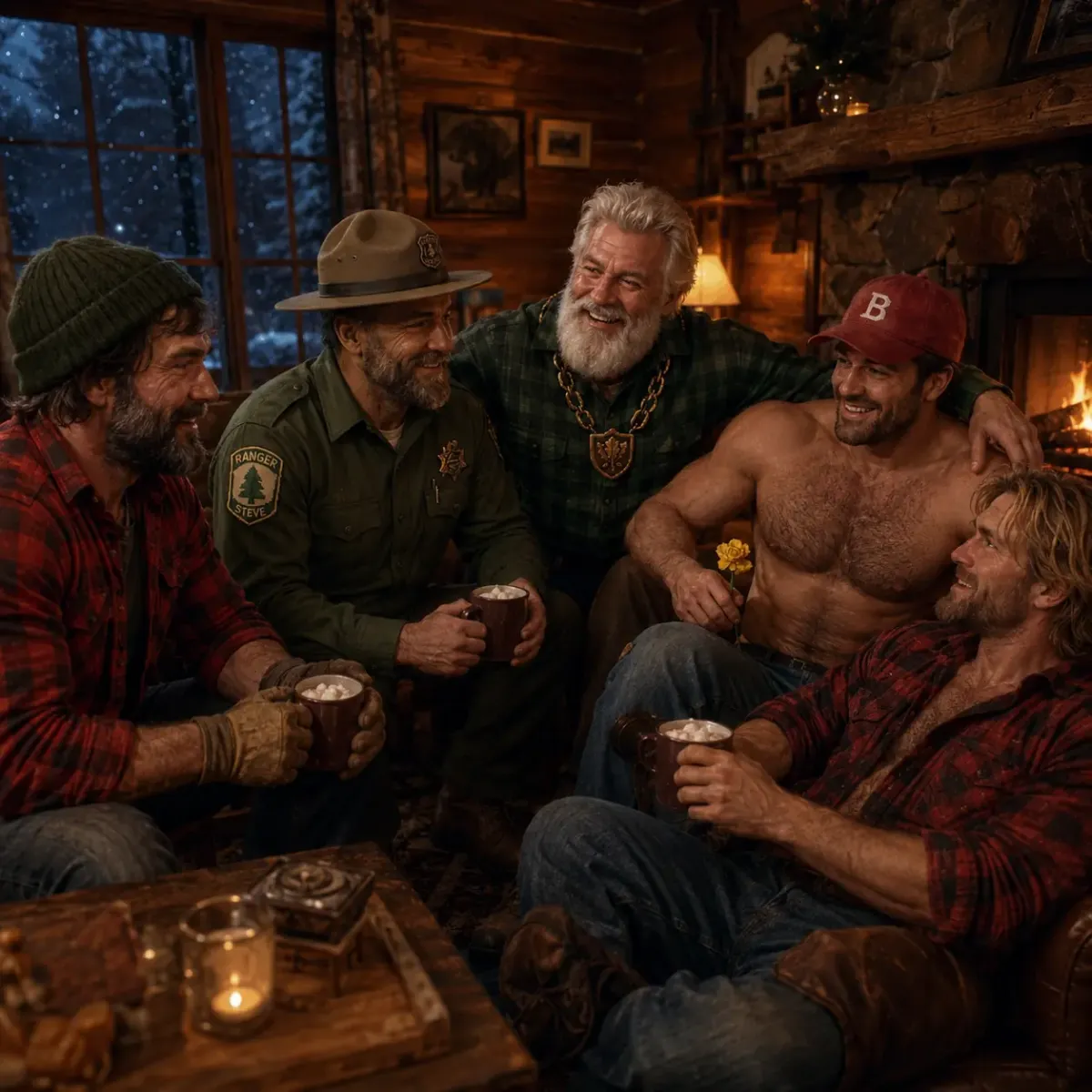
Hey MightyBrawnies, 💪MightyPros, and BrawnyAi Lab readers.
This is the first real BrawnyAi Lab note.
I want this newsletter to be the place where I can talk more honestly about the technical side of BrawnyAi without turning the main newsletter into a wall of machinery. Most people are here for the hunks, the worlds, the drops, the stories, the fantasy. That is still the heart.
But some of you also want to know how the house is being built.
So let’s start with one thing only.
The BBS.
The larger Lumberlandia BBS simulation did not work the way I wanted.
That’s the honest version.
Para mis amigos que hablan español o portugués: las versiones en texto estarán disponibles para miembros registrados.
Texto em Português
Texto en Español
The public BBS stories on the website still exist. Lumberlandia and Lover’s Lane will continue as curated feeds. But the bigger dream, the live multi-character simulation where residents could act on their own, remember, move through their day, talk to each other, and react to me at the same time, became too unstable.
Every fix created more problems.
But the failure taught me something important.
At the beginning, I thought the problem was mostly memory. If the characters remembered more, they would feel more alive. If they remembered B, the town, each other, their routines, their past conversations, then they would become more stable.
That was partly true.
But memory alone does not make a character alive.
A database does not make a mind.
A long prompt does not make a person.
Most chatbot systems rely too much on the natural personality of the LLM. That works for a while, but then the model changes, the context window fills up, the conversation drifts, and suddenly the character stops feeling like himself. People who use companion apps complain about this all the time. The character forgets. The tone changes. The memory gets shallow. The magic disappears.
I wanted to avoid that.
Not because I think I can solve everything overnight, but because BrawnyAi needs characters that can survive beyond one model, one company, one API, or one content policy.
The model should not be the soul.
That became the key idea.
A character needs more than personality text. He needs body, place, pressure, routine, relationships, current mood, recurring concerns, and a reason to speak from his own angle.
If you strip a person of memory, place, pressure, body, and history, then put them in a white box, many people would start sounding similar.
Put one person in a jungle and another in an igloo, and the difference begins.
Give them friends, habits, weather, hunger, old wounds, chores, jokes, fears, favorite places, and suddenly personality has something to grip.
That is what I started calling, in my own internal language, “photorealism in chat.”
Not visual photorealism.
Textual photorealism.
The feeling that a character existed before you interrupted him.
The feeling that he was doing something, thinking about something, worrying about something, wanting something, and then you walked into his life.
That is very different from a chatbot answering a prompt.
Upgrade to become a 💪MightyPro today and unlock the full vault of exclusive BrawnyAi content while directly supporting the art, stories, and tools I create behind the scenes.
One of the moments that made this clear happened when I introduced Sawyer the Drifter to the Lumberlandia BBS cast.
I typed, basically, “hey everyone, we have a new friend! Sawyer.”
I did not script a grand entrance.
But the system responded.
Sawyer arrived cold, guarded, already sounding like someone who had learned not to leave too many traces. Lumberjack Joe welcomed him with flapjacks and axe bluntness. Ranger Steve immediately filtered him through the ridge, masks, and danger. Mayor Oak did what Mayor Oak does and turned weird noises into possible zoning laws. The Jock started quietly scanning stress levels like he was already worried about the new arrival.
It was not perfect.
It was messy. Repetitive. Too many ridge noises. Too many flapjacks. A few lines stepped on each other.
But something happened.
They did not all answer like generic assistants.
They answered like residents.
That was the magic.
Not because the AI suddenly became alive. It did not.
But because the ingredients created enough pressure for the characters to behave differently.
That is the formula I want to preserve.
Character realism improves when the model is treated like a situated performer, not a static profile.
The system needs to know the semantic intent of the moment. It needs the character capsule. It needs context pressure. It needs body, place, and social pressure. It needs an ongoing action frame. And it needs boundary checks so the character does not leak system logic or become a fake authority.
Every post, archive, experiment, and strange little universe here survives because MightyBrawnies and 💪MightyPros choose to support it directly. If this work means something to you, upgrading to 💪MightyPro helps keep the whole project alive while unlocking a deeper library of exclusive content.
Thank you for helping me keep building this world on my own terms.
That is where BII-lite came from too.
BII-lite is a small scoring tool I built to compare whether outputs feel alive. It asks simple things. Can you tell who is speaking without the name label? Does the character interpret the moment through his own body and world? Did the original intent survive? Are the motifs natural, or are they just sprinkled on top like costume glitter?
It is not an objective truth machine.
The final question is still human.
Does this feel alive?
In the latest matrix, the strongest outputs came from giving the characters full ongoingness, not just identity. That means they perform better when they are treated as already in motion.
Mayor Oak should not just be “a bureaucratic mayor.” He should be mid-crisis, converting discomfort into municipal theater.
Lumberjack Joe should not just be “a tired lumberjack.” He should be hungry, sore, practical, and one dull axe away from losing patience.
Ranger Steve should not just be “protective.” He should be watching the perimeter, noticing the fog, and refusing to relax just because everyone else wants the scene to be fine.
The Jock should not just be “supportive.” He should care for B through posture, hydration, routine, emotional grounding, and the practical next step.
Sawyer should not just be “mysterious.” He should look like a quiet lumberjack while one precise systems clue leaks from the old life he refuses to explain.
That is the lesson.
The BBS as a large live simulation may have failed for now.
But it gave me the formula for Digital Minds.
And that formula can travel.
It can power The Jock. It can improve Lumberlandia stories. It can help the future website assistant find images, games, posts, and characters without sounding like a generic help desk. It can eventually make BrwnyXXX feel more searchable and alive. It can help BrawnyAi become less dependent on the personality of whatever LLM is popular this month.
This is why AI sovereignty matters to me.
In our era, especially for people creating sexy hunks, homoerotic fantasy, and adult-adjacent work, relying fully on a third-party model is a fragile way to build. Policies change. Access changes. Companies change. Governments can delay or restrict model releases. Platforms can decide what kind of body, desire, or intimacy is acceptable.
BrawnyAi cannot survive long term if every essential piece of it can be turned off by someone else.
So I use the powerful models when they help.
But I also build smaller, portable, open-source paths whenever I can.
The BBS hurt because it did not become what I wanted.
But it also gave me the next map.
Not a bigger chatbot.
A better resident.
That is what I am working toward now.
A small glimpse inside the engine room
The screenshot here is not pretty, but it matters.
This is one of the internal tools I’m using to test the new Character Performance module. It lets me choose a resident, a context mode, and a continuity lane before sending a message through the system.
In plain English: I’m testing how much “seasoning” a character needs before he starts sounding like himself in a stable way.
The Jock should not sound like Mayor Oak. Mayor Oak should not sound like Lumberjack Joe. Sawyer should not suddenly become a generic assistant wearing a flannel shirt.
That sounds simple, but it is one of the hardest parts of this work.
A lot of chatbot and companion systems rely heavily on the natural personality of the LLM underneath. That can feel magical at first, but it also creates a familiar problem: the model changes, the context window fills up, the conversation gets long, and the character starts drifting. He forgets. He flattens. He becomes more generic. The person you were talking to slowly turns into a different voice.
What I’m trying to build is a layer above that.
A system where the character’s texture comes from his own capsule, pressure, body, place, routines, relationships, and current situation, not only from whichever LLM happens to be running that day.
That is why this little terminal screen is important. It is not the final product. It is the testing kitchen.
Can I send the same message through different settings and get The Jock to remain The Jock? Can I change the context from direct chat to story pressure and still keep the resident recognizable? Can I eventually run the same character through different LLMs and preserve the same core identity?
That is the next big test.
If the Character Performance module can stay consistent across different LLMs, then one major problem is much closer to solved: personality drift.
After that comes the second major problem: memory.
If we can solve both, personality stability and memory continuity, then BrawnyAi gets much closer to something I actually care about. Not just chatbots. Not just prompt costumes. Digital residents who can keep their shape over time.
With love ❤️,
B

BrwnyXXX is BrawnyAi's separate companion space for 💪MightyPros who want access to the wider archive. If your membership includes access, you can claim it through the official Side Door.
BrwnyXXX
Fanvue
Patreon
Prefer to keep things simple? Patreon remains available for lighter BrawnyAi support, while Fanvue and BrwnyXXX serve the separate companion platform experience.