
2026-06-14 - Obsidian Monitor & Neon Bay: A Retro-Futurist Archive of Sculpted Masculinity and Rural Mythos - 31 artworks
Panasonic monitors, rural mythos, and sculpted anatomy in this retro-futurist archive of 31 pieces.


This drop is a curated collision of analog nostalgia and hyper-idealized physicality. We traverse the glowing rectangles of vintage Panasonic CRTs—where muscular subjects are framed like cinematic portraits in sterile labs or sun-drenched balconies—and step into mythic rural tableaux where denim overalls and midday sun carve anatomy into living sculpture. The aesthetic oscillates between clinical admiration, warm Americana folklore, and sci-fi surveillance fantasy, creating a cohesive world where strength is both labor and performance.
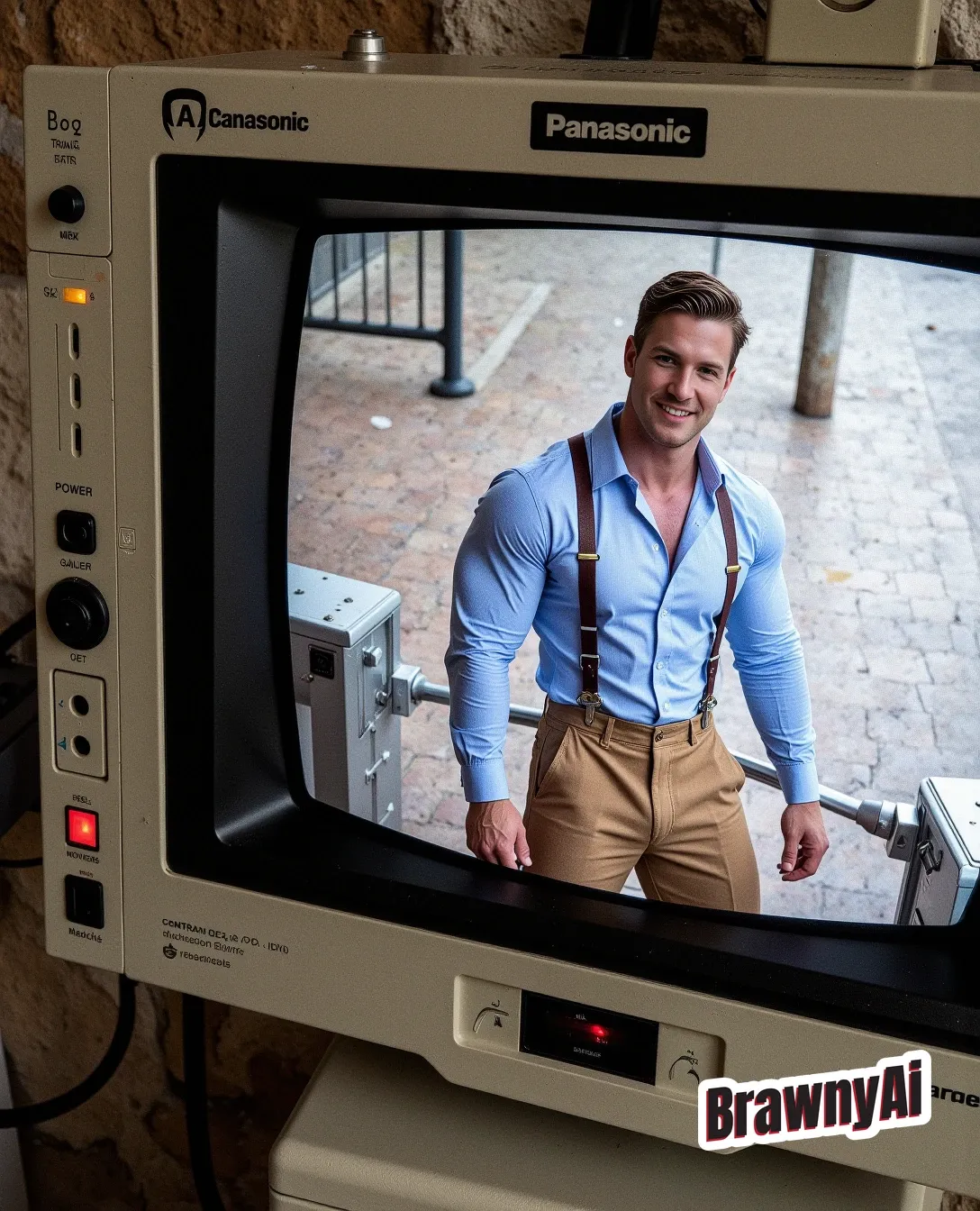
This piece presents a stylized, almost cinematic portrait framed within the physical boundaries of a Panasonic broadcast monitor—complete with control dials, indicator lights, and mounting hardware. The screen displays a muscular male figure posed in what appears to be a sterile or institutional interior: tiled walls, metal fixtures, and utilitarian furniture suggest a locker room, medical bay, or testing chamber. The lighting is crisp and directional—likely simulated studio lighting—casting sharp highlights along the contours of the subject’s torso, shoulders, and arms. This accentuates the sculpted definition of his physique: each abdominal segment, pectoral ridge, and deltoid curve rendered with anatomical precision. The open light-blue shirt, held loosely by brown suspenders, functions less as clothing than as a framing device—drawing attention to the tension between fabric and flesh, restraint and exposure. His stance is deliberate: hands gripping his hips or waistband, spine straight, chest forward—a pose that speaks to both physical discipline and performative confidence. The smile is warm but controlled, hinting at awareness of being observed, staged, or evaluated. There’s a subtle theatricality here—the subject knows he is part of an image, and the monitor itself reinforces this meta-layer: we are watching a watched body, mediated through technology. Aesthetic-wise, the work blends retro-futurism with hyper-realism. The vintage monitor contrasts with the clean, almost digitally perfected rendering on its screen—skin tones smooth yet lifelike, shadows soft but intentional. A watermark (“BrawnyAi”) and cryptic labels like “Whistling Coffee Breath” add a layer of fictional branding or AI-generated lore, suggesting this image may exist within an alternate media universe where physical form is both idealized and commodified. Mood-wise, the piece oscillates between admiration and unease: admiration for the controlled perfection of the body; unease at its context—surrounded by machines, under observation, smiling as if proud to be displayed. It feels like a moment captured from a sci-fi procedural or a psychological thriller about surveillance, identity, and the aesthetics of control.

This image constructs a layered visual narrative: a modern ideal of masculinity framed through the lens of obsolete technology. The central figure is rendered not as a candid subject but as a composed portrait—smiling, posed, and aware of being observed. He wears a light blue button-down shirt, unbuttoned at the collar to reveal a hint of chest; brown leather suspenders hold tan trousers in place. While his lower body is partially cropped by the television screen, the visible anatomy emphasizes form over function: broad shoulders taper into defined arms, and the fabric clings subtly to muscle without exposing vulnerability. The attire functions as a costume of mid-century professionalism—clean lines, structured fit—but the open collar and exposed torso introduce an undercurrent of controlled exposure that aligns with the prompt’s request for artistic framing rather than literal description. Lighting in both layers is deliberate. Within the screen: soft, diffused daylight bathes the subject from above and slightly behind, casting gentle shadows along his jawline, clavicle, and biceps—highlighting structure without harshness. The background (paved plaza, metal railing) is rendered with shallow depth of field, allowing focus to remain locked on the figure as a sculpted presence. Outside the screen: warm ambient light spills onto the beige chassis of the Panasonic monitor, which bears faux technical labels and glowing red indicators—evoking both nostalgia and speculative futurism. The contrast between the cool tones inside the display and the earthy warmth surrounding it creates a cinematic tension: we are watching something curated, almost archival, yet alive with contemporary allure. Aesthetic-wise, this is a hybrid of retro sci-fi and polished fitness portraiture. The monitor itself—complete with dials, switches, and illegible branding—suggests a world where technology retains tactile complexity even as its interface becomes iconic. The “BrawnyAi” watermark further signals artificial curation: this is not merely a photograph but a generated ideal, stitched together from cultural codes of strength, style, and screen presence. Mood remains ambiguously inviting. There’s confidence in the gaze, charm in the smile—but also a quiet awareness that beauty here is mediated, packaged, displayed. The framing invites contemplation: Are we observing a man? A character? A product? The answer lies somewhere between all three—crafted to feel both aspirational and self-consciously stylized, like a hero from a show that never aired but might have been dreamed into existence by fans who loved old monitors and new abs.
💪MightyPro Exclusive
This post is reserved for active 💪MightyPro members.