
Lumberlandia: Founder’s Valley — Build Your Own Corner of Lumberlandia
Become the Founding Steward of a living Lumberlandia settlement in this ambitious, functional city-building Early Playtest.

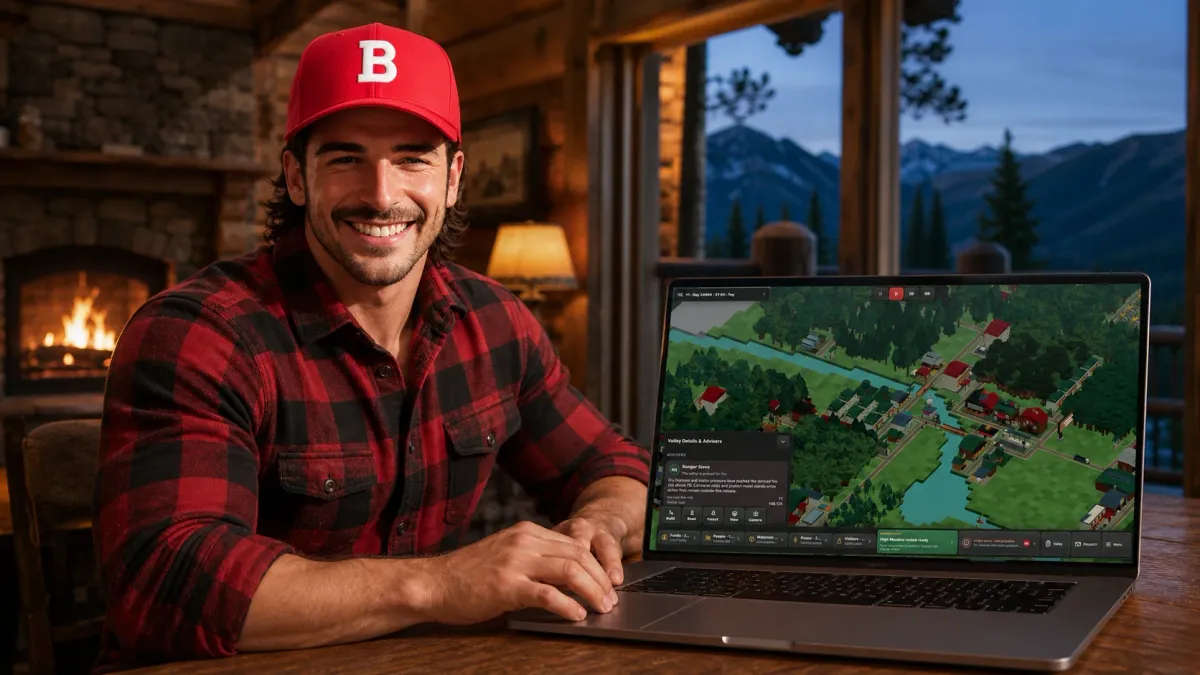
For years, I could see Lumberlandia in my mind: a lumberjack haven among the lakes, forests, and mountains—a whole region where our characters could build a life together.
Now you can build a corner of it yourself. Lumberlandia: Founder’s Valley is an ambitious, functional city-building Early Playtest. It is not a finished commercial game, but the simulation works, its systems connect, and your valley can grow from a few roads into a busy settlement with homes, forestry, industry, freight, utilities, visitors, and district charters.
Play Lumberlandia: Founder’s Valley · Browse all BrawnyAi games
Before the valley, there was Lumberlandia
I created Lumberlandia at the same time as BrawnyAi. From the beginning, I imagined a place inspired by Banff, Jasper, and the Rocky Mountains: not one city, but a beautiful region of forests, settlements, villages, and shared stories. Ethan helps lead that wider region. Mayor Oak handles the everyday needs of its main town. Beyond them are many places still waiting to be imagined.
Founder’s Valley is one of those places. You do not play Ethan or Mayor Oak. You become the Founding Steward of a new settlement branch, responsible for turning a promising landscape into a valley that can actually sustain people, work, nature, and visitors.
Three years ago I could describe that world, sketch pieces of it, and build experiments such as the earlier Lumberlandia BBS. The technology was not ready to help me express the scale I could see. The tools I use now have changed that. Like BrawnyAi Chess, Solitaire, and Sudoku, this project is also a technical test of how far a small independent creator can go—and, just as importantly, it is genuinely playable.
You are not placing decorations—you are stewarding a valley
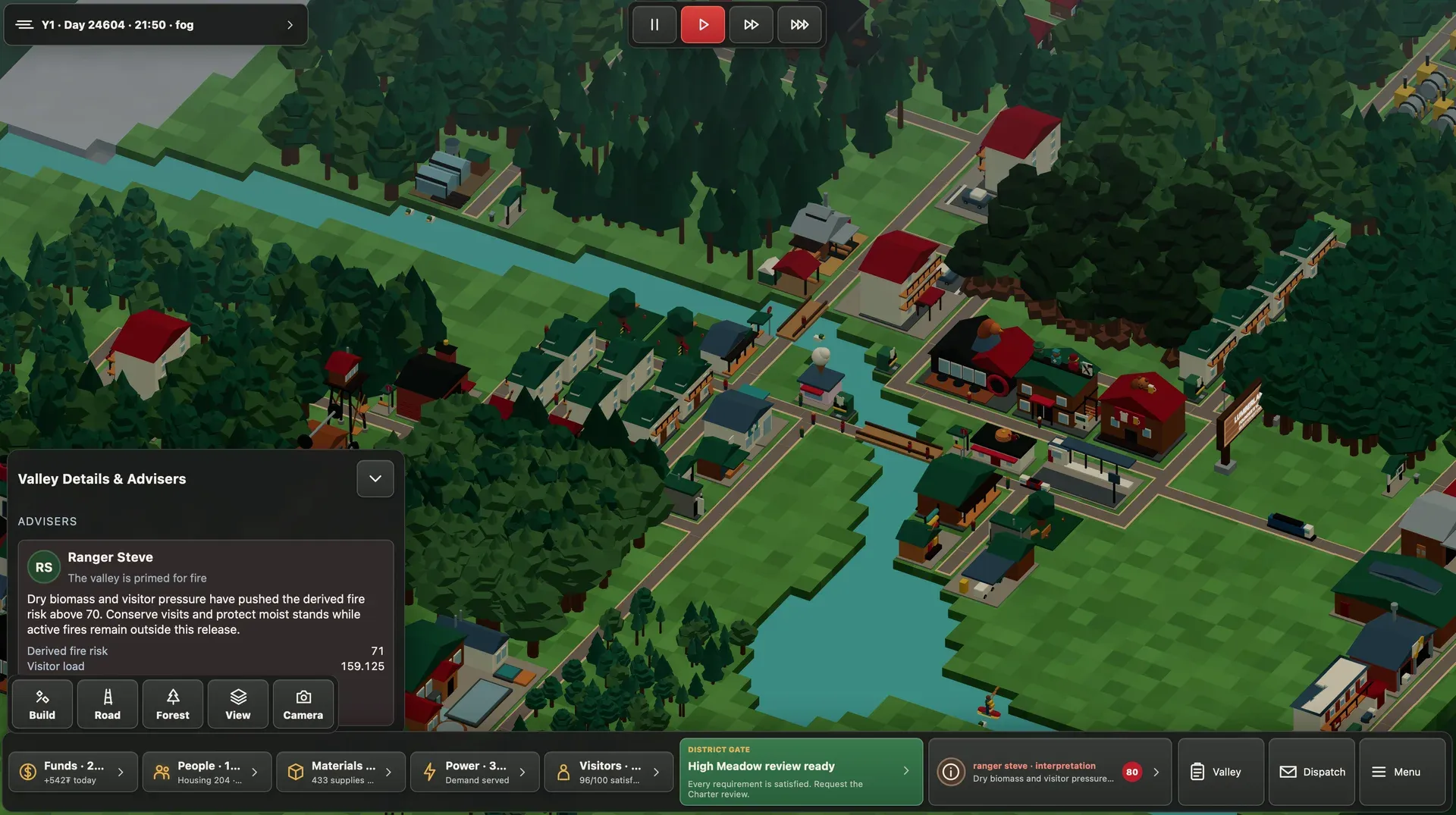
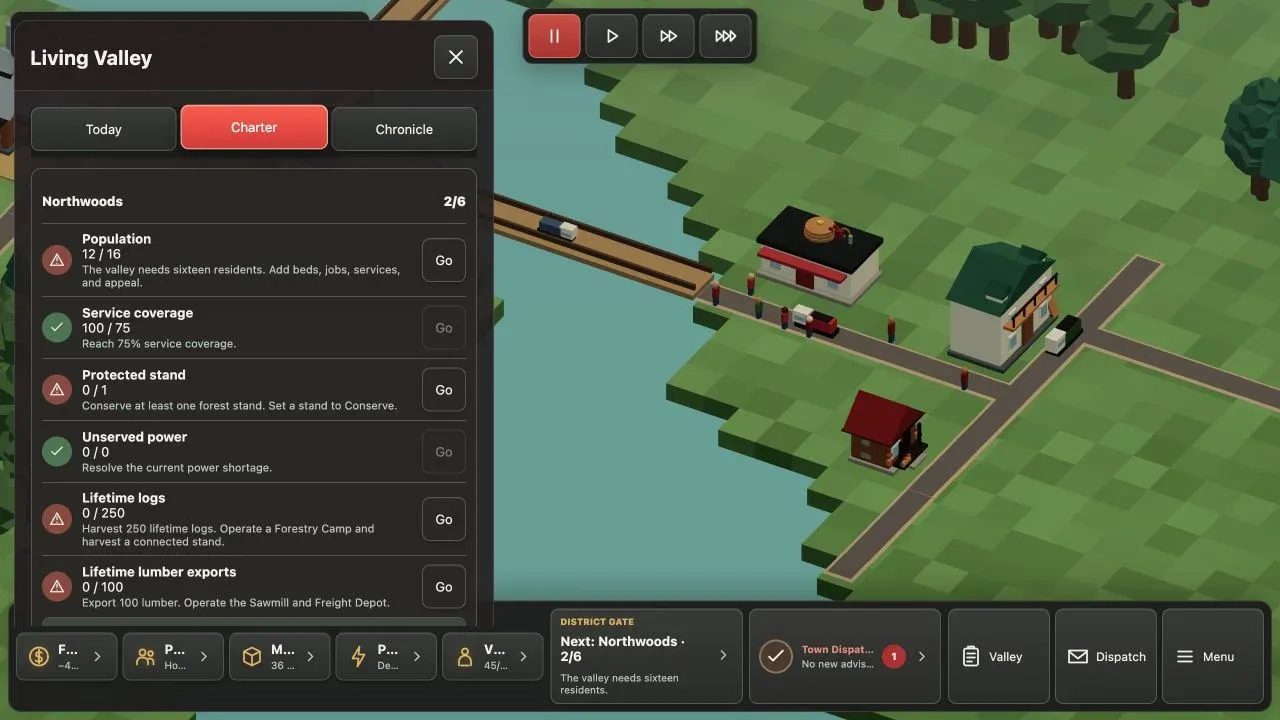
The heart of the game is a connected settlement loop. Lay roads, open construction sites, bring homes and jobs into balance, and decide how the forest should be used or protected. Cooperative finances have to cover each project. Materials move through production and freight. Power generation has to meet demand. Tourism can create opportunity while also adding pressure to the landscape.
As the valley grows, four district paths unlock through charter reviews. Those reviews are evidence-based: the game looks at population, housing, services, protected stands, power, production, exports, and other real conditions in your simulation. Advisers interpret that evidence and warn you when a seemingly healthy valley is carrying fire risk, visitor pressure, or another tradeoff that deserves attention.
49 working building identities—and a larger visual workshop
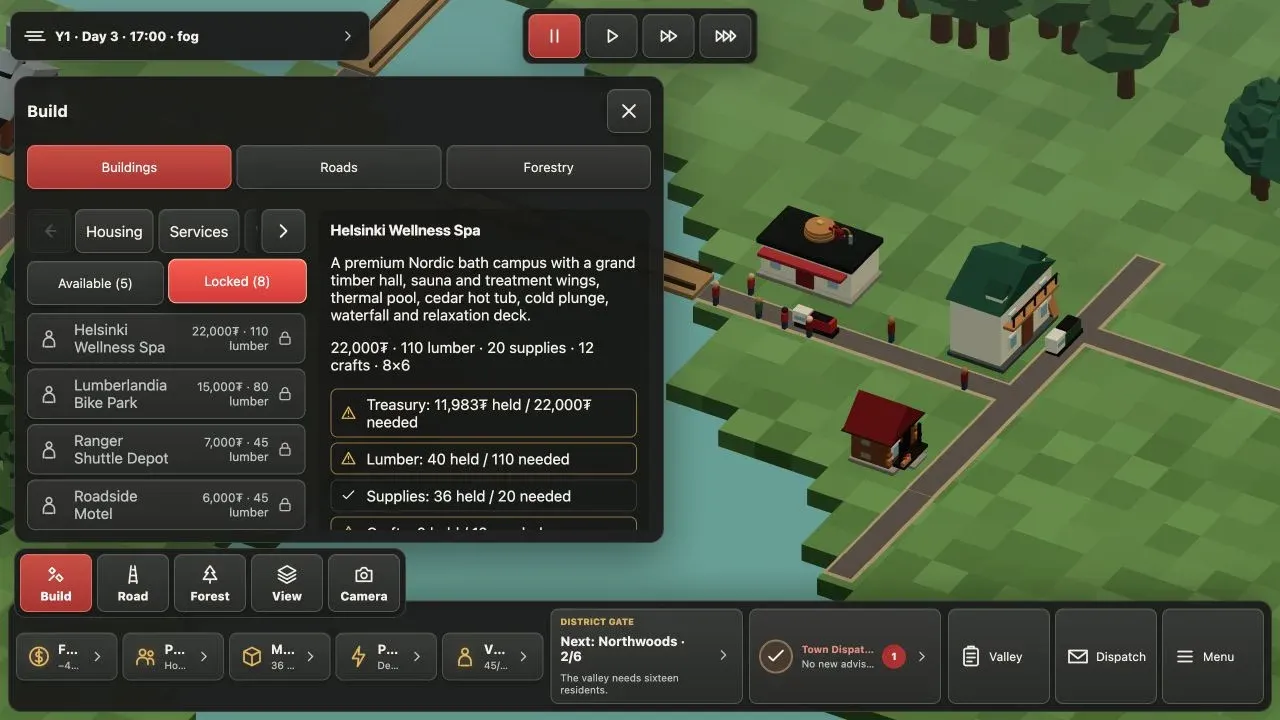
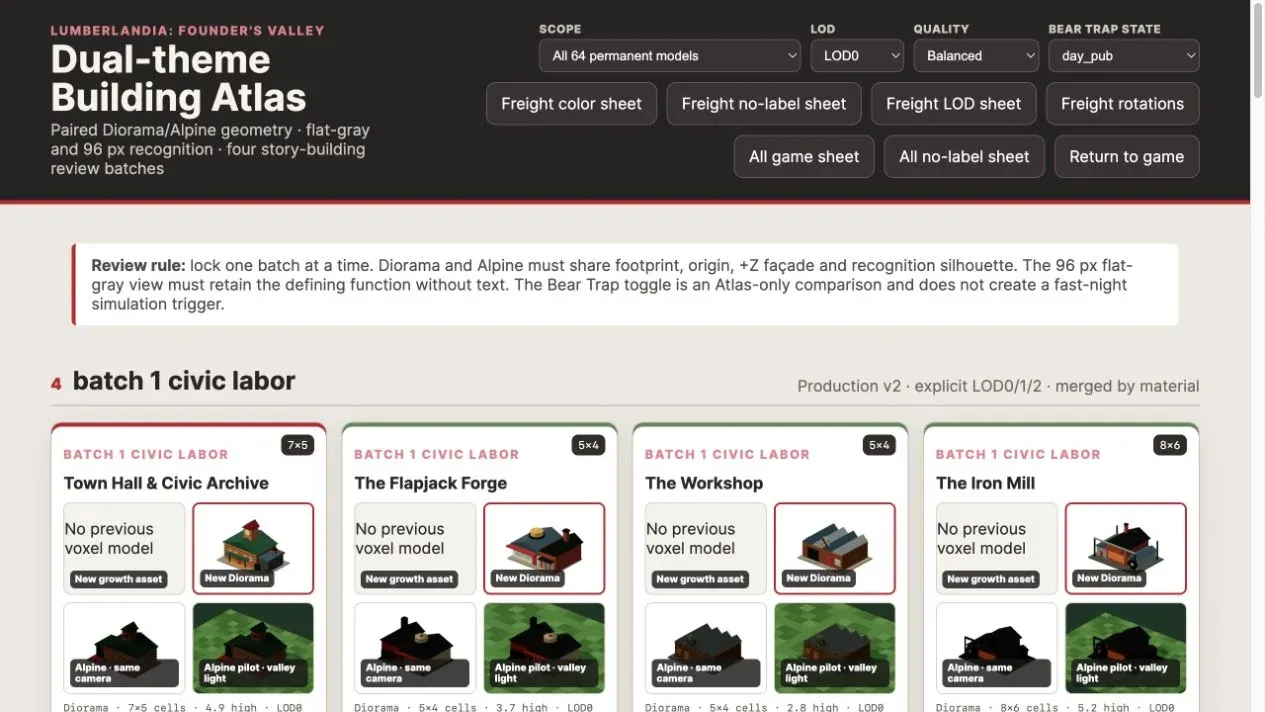
The production game currently has 49 gameplay building identities: the structures that participate in construction, housing, jobs, services, production, power, freight, civic life, and tourism. Behind them, the permanent Building Atlas contains 64 visual models. Sixteen of those Atlas models are Creative-only visual prototypes; they do not yet have finished gameplay mechanics.
I want to be transparent about that distinction. The Atlas is both a library and a design workshop. It lets me compare silhouettes, footprints, materials, lighting, and the visual language of Lumberlandia without pretending every model is already part of the released simulation.
Creative Valley, repeatable seeds, and controls that travel
If you want the structured challenge, start a flagship valley and work through the charter progression. If you want a broad sandbox, Creative Valley unlocks all buildings, research, and current disaster systems immediately. A shared seed produces the same map again, making it easier to compare plans or revisit an idea.
The interface is designed for desktop and touch, with responsive panels, camera controls, simulation speeds, and an overview that can move from a quiet new settlement to a dense working valley.
Your game stays with you
You do not need an account. Founder’s Valley has no game backend, advertising, analytics, or game-state tracking. Your saves remain on this device in your browser’s storage. Because browser storage can be cleared or lost when you change devices, the game also provides JSON export and import: export a portable backup to your own computer or phone, then import it whenever you need it.
The lives I can imagine inside these buildings
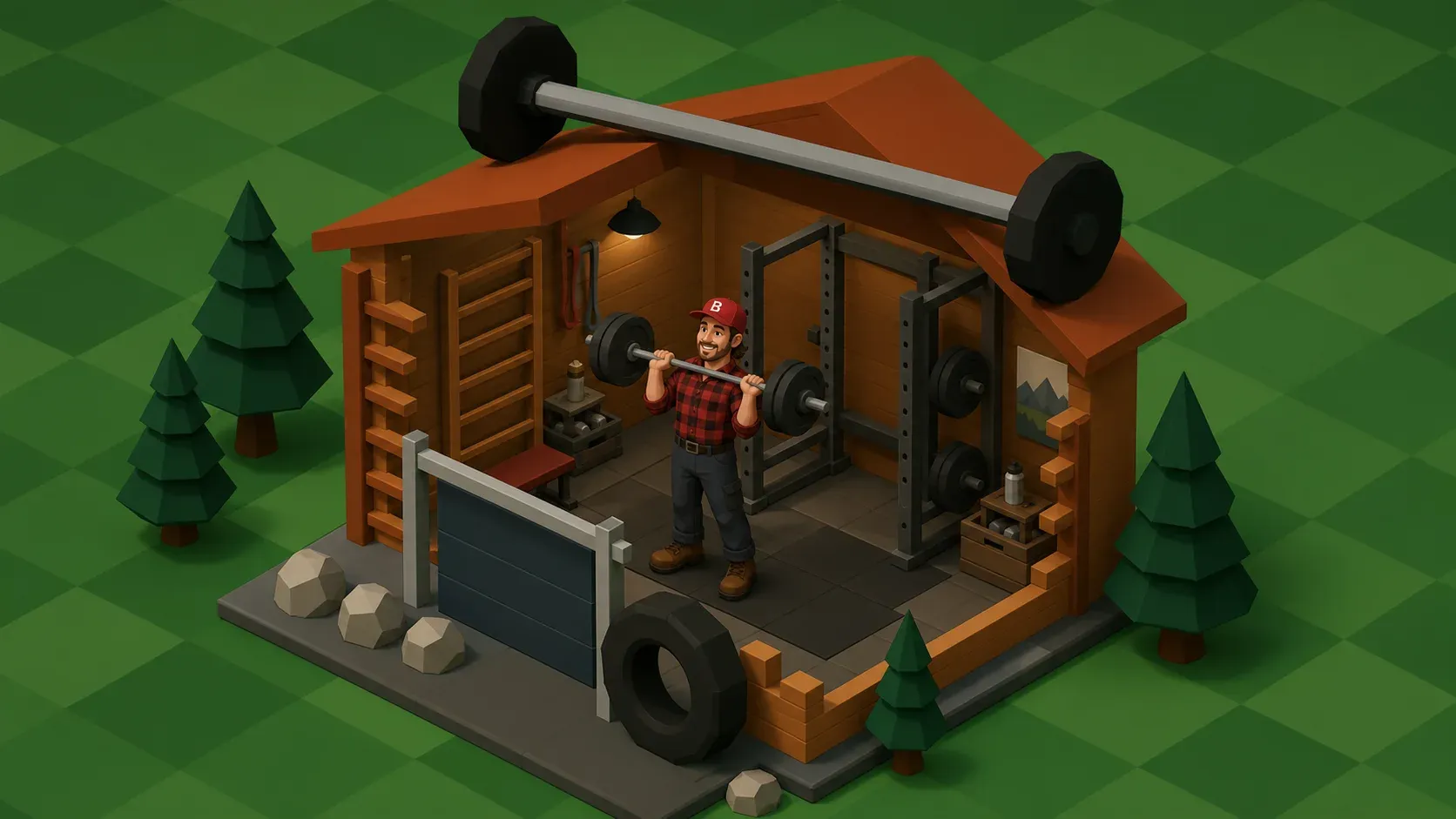
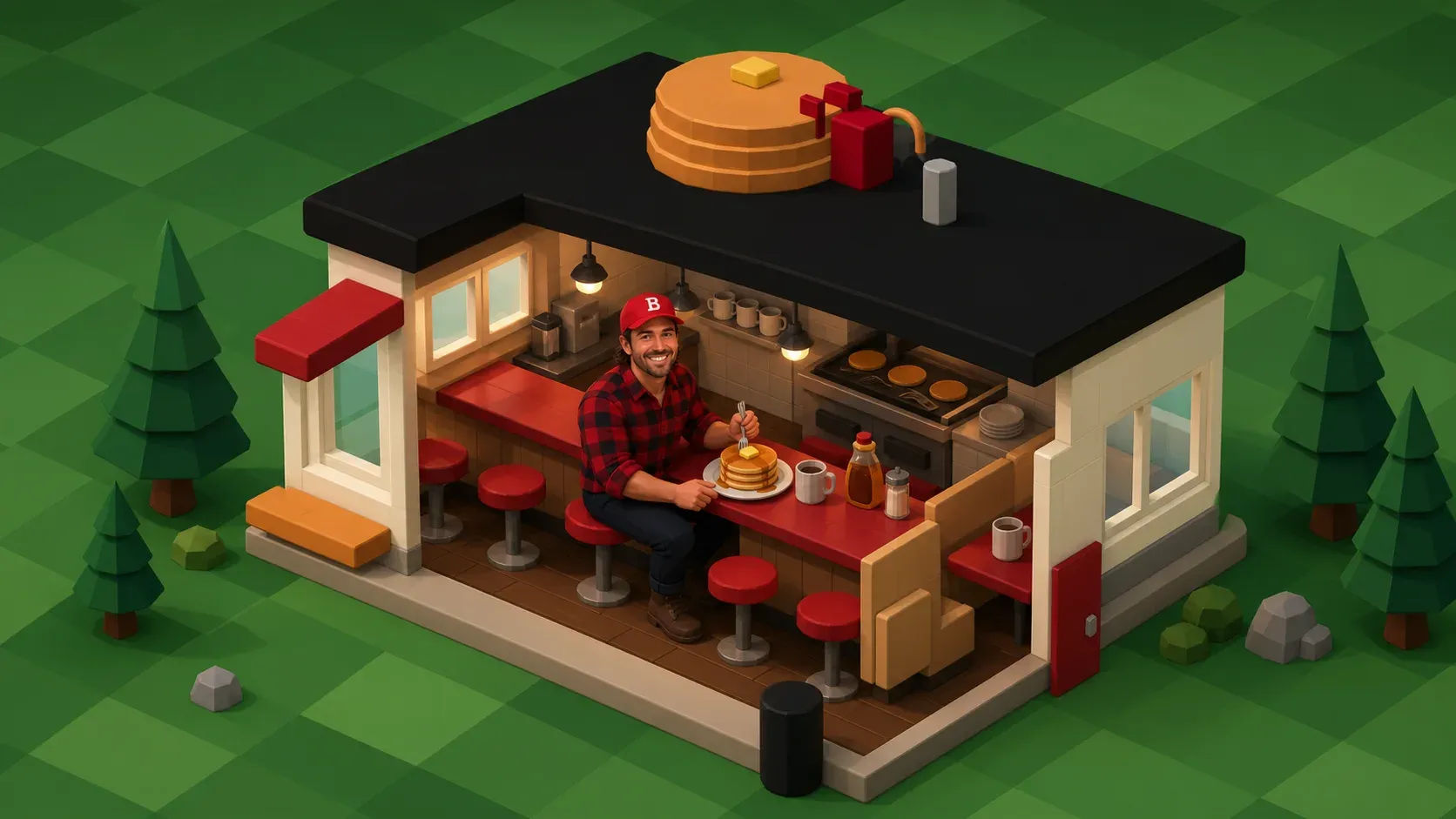
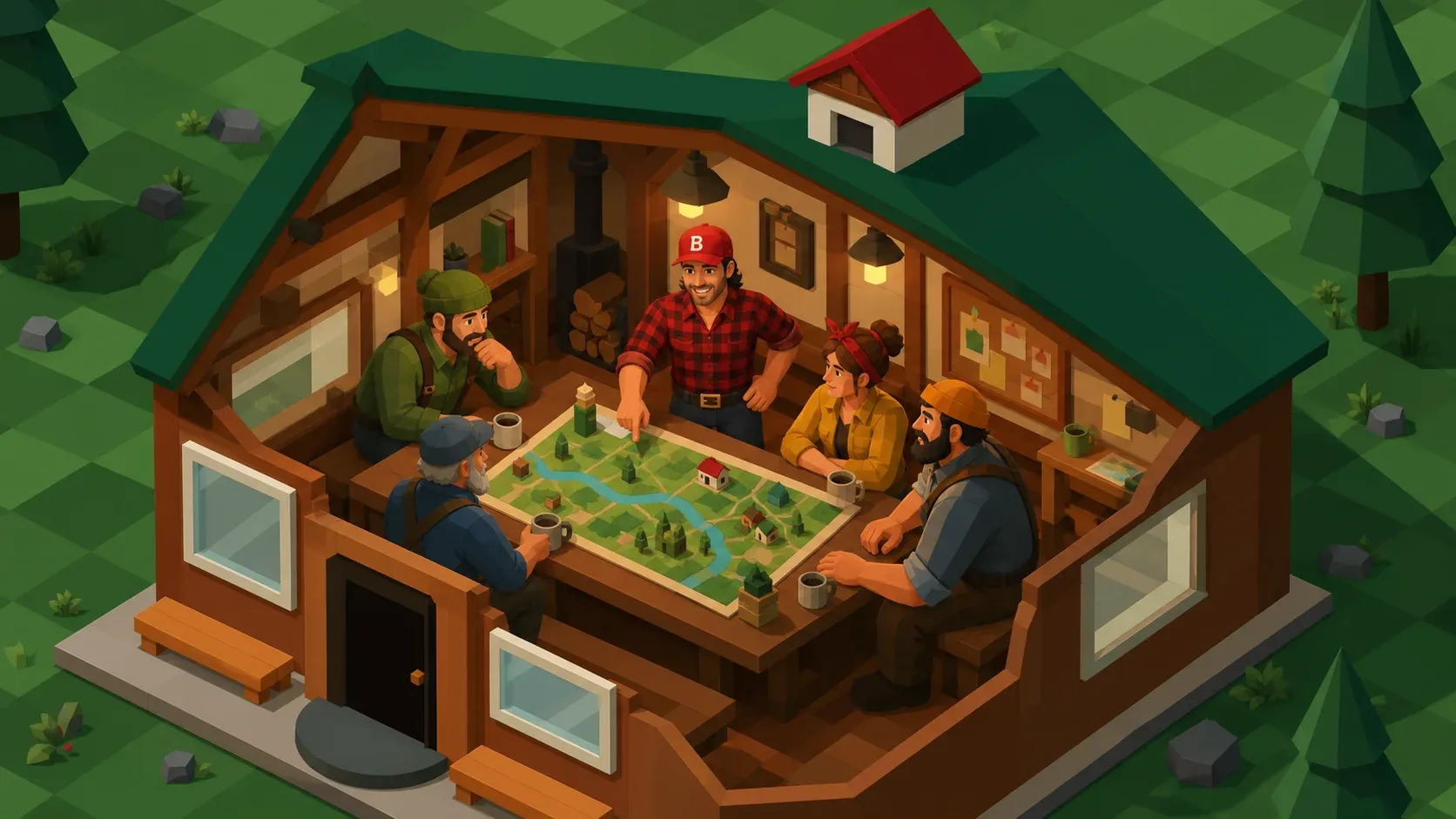
The current simulation models the valley at a civic level. It does not yet simulate building interiors, a persistent individual Jock walking through town, or real-time conversations with residents. Still, those are exactly the kinds of futures this prototype helps me explore. These three scenes imagine what familiar Lumberlandians might someday do inside structures that already define the valley’s skyline.
What you can play today
- Road building and connected construction sites
- Forestry production, conservation choices, and changing fire risk
- Housing, jobs, services, population, and workforce balance
- Cooperative treasury management and daily operating costs
- Power generation, demand, and dispatch
- Materials, freight capacity, and lumber exports
- Tourism, visitor satisfaction, and environmental pressure
- Four district paths with evidence-based charter reviews
- Advisers who interpret the actual state of your valley
- Creative Valley mode and repeatable world seeds
- Responsive desktop and touch controls
- Automatic local saves plus portable JSON export and import
An Early Playtest with a much larger horizon
There is still a great deal I want to try visually and mechanically. In the future, I can imagine a canonical Lumberlandia town where our favorite digital hunks live, visit these buildings, and perhaps even talk with us. For now, Founder’s Valley gives that dream a working landscape: a place where systems interact, settlements take shape, and anyone can begin building a village of their own.
If you find a bug, have an idea, or simply want to show me the valley you created, please reach out. I would love to hear what would make Lumberlandia feel more alive.
Founder’s Valley and the worlds around it are independent experiments made possible by the people who support BrawnyAi. Upgrading to 💪MightyPro directly supports new buildings, deeper systems, new games, and the continuing evolution of the BrawnyAi universe.
Support BrawnyAi as a 💪MightyPro
Play Lumberlandia: Founder’s Valley · See every BrawnyAi game